The glamping market has grown faster than most of the people designing for it have been able to understand. In the span of a decade, what began as a niche category - canvas tents with better mattresses has become a legitimate hospitality segment attracting institutional investment, brand development, and the sustained attention of a traveler demographic that is discerning, experience-literate, and increasingly hard to impress.
The design response to this growth has been uneven. Some operators have built genuinely exceptional products. Many more have built something that looks like glamping: the fire pit, the platform, the Edison bulbs without understanding what actually drives the experience that guests are paying for, talking about, and returning to.
The difference between those two outcomes is not budget. It is not location. It is a clear-eyed understanding of what glamping guests actually want and a design process organized around delivering it.
This piece sets out a framework for thinking about that design problem. It is not a checklist of amenities. It is an attempt to articulate the underlying guest psychology that should drive every design decision, from site layout to material selection to the sequence of arrival.
The Glamping Guest Is Not Camping
The first and most important design principle is the one most frequently misapplied: the glamping guest is not a camper who wants more comfort. They are a hospitality consumer who wants a different kind of experience - one that conventional hotels cannot provide.
Understanding this distinction changes everything about how you design.
The camper tolerates inconvenience as part of the experience. The glamping guest does not. They are not testing themselves against nature; they are seeking immersion in it. They want to feel the presence of the landscape; the sounds, the light, the air without the friction of traditional camping. The shower needs to work. The bed needs to be excellent. The mosquitoes need to be manageable. These are not luxuries; they are the baseline contract.
But here is where many glamping operators make their critical error: they treat comfort delivery as the primary design goal, and nature as the backdrop. This gets it exactly backwards. Nature is the product. Comfort is the delivery mechanism that makes it accessible.
A glamping structure that prioritizes amenity quality but positions guests at a remove from the landscape through site design, orientation, or material choices that feel more hotel room than woodland retreat will always underperform a simpler structure that genuinely immerses guests in the environment they came to experience.

What Guests Are Actually Buying
When a guest books a glamping experience, they are making a purchase decision that involves multiple layers of motivation. Understanding those layers is the starting point for meaningful design.
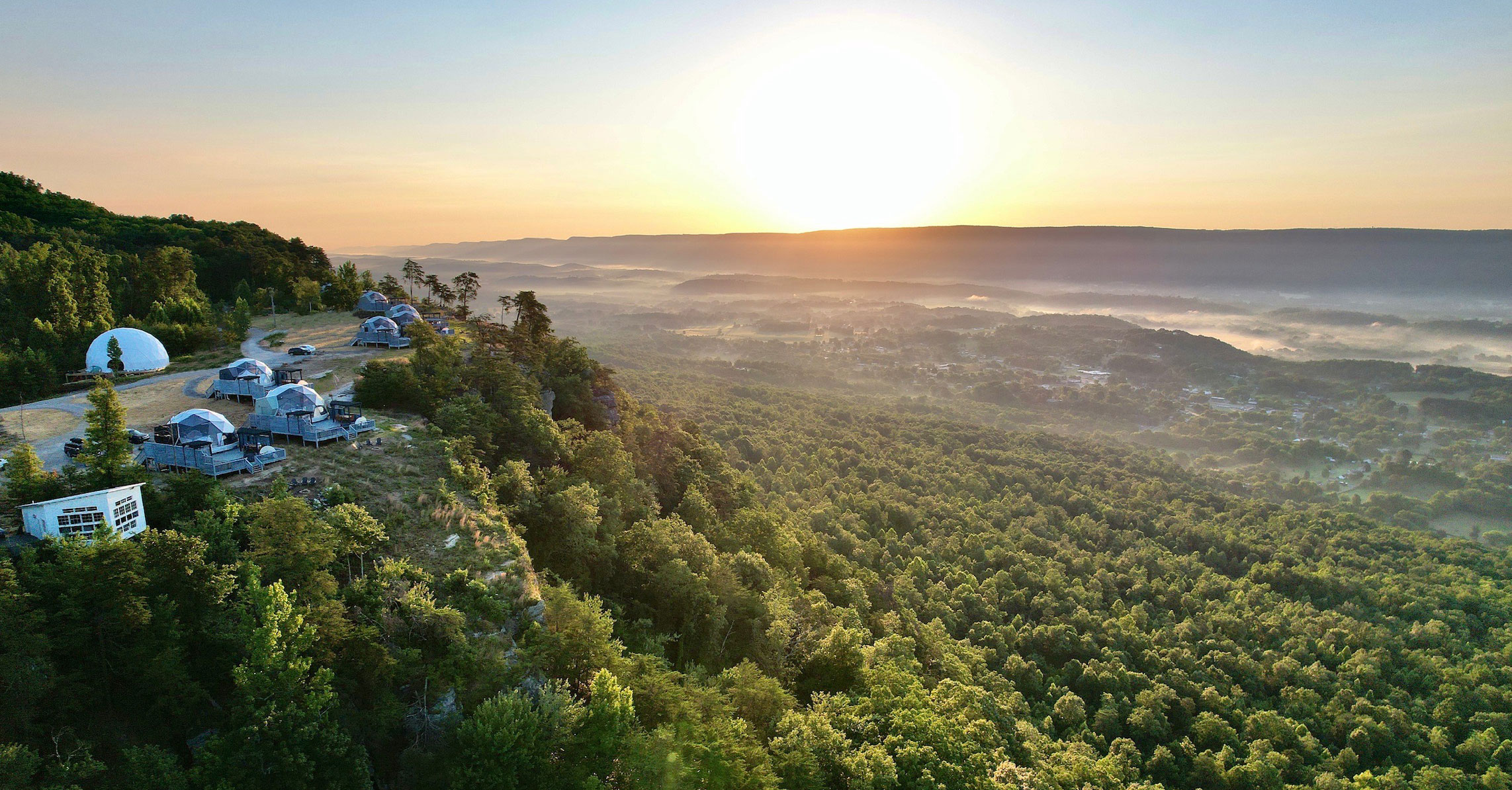
Disconnection. The glamping guest is, almost universally, seeking relief from the density and demands of their ordinary life. This is not merely about putting phones away. It is about spatial relief; being in an environment where the visual field is not crowded with other people, signage, infrastructure, and human noise. Site design that gives each guest a genuine sense of privacy and separation is not a nice-to-have. It is the core product.
Sensory richness. The built environment most glamping guests inhabit daily is acoustically flat, visually monotonous, and thermally controlled. The glamping environment should be the opposite: a place where the sound of rain on a canvas roof is an amenity, where the changing light of a day through a treeline is something guests actually notice, where the smell of woodsmoke from a fire pit is part of the experience architecture. Design that activates multiple senses simultaneously and that changes throughout the course of a day and across seasons creates the kind of memory formation that drives both reviews and return visits.
Low-friction spontaneity. Glamping guests want to feel that the experience is unscripted even when, in reality, every element has been carefully designed. This is the hospitality paradox: the more seamlessly and invisibly the operation runs, the more guests feel they have stumbled upon something genuine. Design for this by eliminating the visible machinery of the operation, utilities routed out of sight, storage integrated into structure, staff circulation paths separated from guest paths so that what guests encounter at every turn is the experience, not the infrastructure supporting it.
Social permission. For many guests, the glamping format provides social permission to be present in a way that their ordinary routines don't allow. A couple can spend an entire day doing very little and feel entirely justified. A family can be together without the structured activity of a resort. Design should support this mode by creating spaces, both within the structure and immediately outside it that are genuinely comfortable for extended, unscheduled time. A deck or porch that is too small, too exposed, or too uncomfortable to sit in for hours is a design failure, regardless of how beautiful the view is.
A Framework for Design Decisions
With that guest psychology as the foundation, the following framework organizes the key design decisions that determine whether a glamping experience delivers on its promise.
1. The Arrival Sequence
Arrival is the moment of highest psychological transition for the guest, the point at which they shift from the mindset of daily life into the mindset of the experience they've come for. The design of that transition is one of the highest-leverage decisions an operator can make, and one of the most frequently underinvested.
A well-designed arrival sequence does three things: it marks a clear threshold between the ordinary and the exceptional; it gives guests their first authentic encounter with the landscape character of the property; and it builds anticipation for what is coming without revealing everything at once.
This might mean a carefully designed entry road that passes through a canopy of trees before the first structures come into view. It might mean a check-in experience that happens outdoors, at a point in the property where the landscape is particularly compelling. It might mean the path from parking to individual site is designed to unfold the site progressively, so guests are discovering the property rather than arriving at it.
What it should never be is a drive into a parking area followed by a walk past service infrastructure to a structure that is immediately fully visible. That sequence destroys the psychological transition before it has a chance to begin.
2. Site Placement and Orientation
The placement and orientation of each individual glamping structure determines more about the guest experience than almost any other design decision - including the quality of the structure itself.
Placement should be driven by two primary considerations: view and privacy. These are not always in tension, but when they are, the resolution requires design judgment that generic site planning cannot provide. A structure with an extraordinary view but no visual separation from neighboring sites will generate consistent complaints about feeling exposed. A structure with excellent privacy but a view into a service yard has failed at the most basic level.
Orientation matters more than most operators expect. The direction a structure faces determines what quality of light enters it throughout the day, which sounds guests wake up to, and whether the outdoor living space: deck, fire pit, seating area is usable in the morning, the evening, or both. These decisions should be made specifically for each site based on the site's actual characteristics, not applied uniformly across the property.
3. The Threshold Between Inside and Outside
The defining spatial experience of a well-designed glamping structure is a threshold between inside and outside that is genuinely ambiguous, a zone where the guest is simultaneously sheltered and immersed. This is what no hotel room can offer, and it is the central design opportunity of the building typology.
This threshold is most commonly expressed as an outdoor living space, a deck, porch, or terrace that is large enough to be genuinely habitable, that has some form of overhead cover to make it usable in variable weather, and that is oriented and screened to give guests a sense of private possession of their immediate landscape.
The instinct to minimize this space in favor of interior square footage is one of the most common and most costly design errors in glamping development. Guests spend a disproportionate share of their time in this threshold zone. They take their photographs there. They describe it in their reviews. The quality of that outdoor living space is more directly correlated with guest satisfaction than the quality of almost any interior element.
4. Material Language and Authenticity
Guests who book glamping experiences have high visual literacy and a finely tuned sensitivity to inauthenticity. They can distinguish between materials that belong in the landscape and materials that are merely styled to look like they do. This has significant implications for material selection across every element of the design.
The operative principle is not that everything must be natural or rustic, it is that the material language should be coherent, considered, and honest. A structure that uses genuine wood and canvas and stone in a thoughtful way will outperform a structure that uses vinyl wood grain, synthetic canvas, and manufactured stone at a higher amenity specification level. Guests perceive authenticity in material even when they cannot name what they are responding to.
This principle applies to everything: the fabric of the tent or the siding of the cabin, the fixtures in the bathroom, the furniture on the deck, the fire pit surround, the path material underfoot. Each element is a signal, and the cumulative effect of those signals is the guest's sense of whether the place is genuine or performed.
5. Operational Invisibility
The final design principle is one that is fully in place only when guests don't notice it. Operational invisibility means designing the physical plant of the property so that the infrastructure required to run it; utilities, housekeeping circulation, laundry, maintenance access, waste management is entirely absent from the guest experience.
This requires deliberate planning from the earliest stage of design. Utility routing decisions made in schematic design can either support or permanently undermine the guest experience at every individual site. Maintenance access paths need to exist and need to be separated from guest paths. Housekeeping needs to be able to service sites efficiently without guests perceiving the operation.
When this is done well, the property feels effortless and self-sustaining which is precisely the quality guests associate with exceptional hospitality, regardless of the category.

The Mistake of Leading With Product
A final observation, and perhaps the most important one for operators who are in the process of making program decisions: the glamping market is not short of product. It is short of genuinely considered experience.
The competitive pressure in the sector driven by rising supply and increasingly sophisticated guests is not rewarded by adding more amenity categories. It is rewarded by doing fewer things with greater intentionality. A property with twelve site types, four accommodation formats, and a full amenity suite that has not been designed around a coherent understanding of the guest experience will underperform a smaller, more focused property that has.
Clarity of design intent, expressed consistently from the arrival sequence to the material of the fire pit surround, is what creates the sense of a place that has been made for a specific kind of experience rather than assembled from a hospitality catalogue.
That is what glamping guests actually want. Not more - better.
Nadi Group is an award-winning interdisciplinary design studio with studios in Winnipeg, Toronto, and Detroit, specializing in hospitality, mixed-use development, and innovative communities. To discuss an outdoor hospitality project, visit nadigroup.com or book a consultation.